

How Auditing & Risk Management Safeguards Businesses

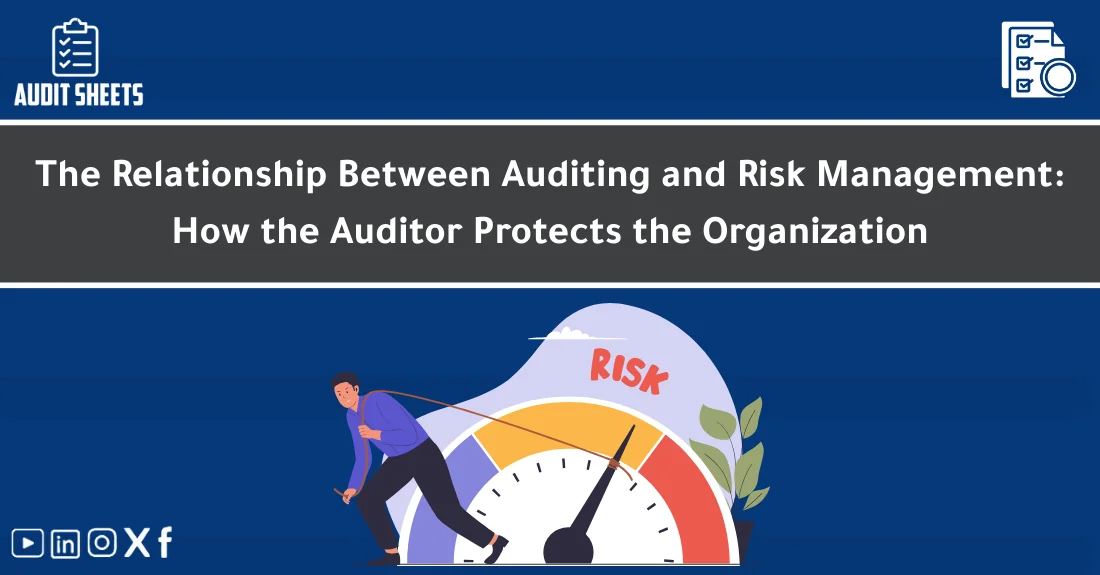
Audit and accounting firms, legal auditors, and accountants who apply International Standards on Auditing (ISA) and SOCPA face constant pressure to identify and mitigate risks while producing defensible audit evidence in comprehensive audit files. This article explains how auditing & risk management integrates into daily audit workflows — from planning and sampling to documenting evidence and closing — and gives practical steps, templates, and KPIs to improve audit quality and control.
Why auditing & risk management matters for auditors
For firms operating under ISA and SOCPA, auditing & risk management is not an optional discipline — it is the backbone of effective assurance. Auditors must identify significant risks of material misstatement, design responsive procedures, and document evidence and findings in workpapers that will withstand regulatory and peer review.
Understanding the relationship between audit and risk is critical for allocating staff, scoping materiality, and choosing sampling methods that produce reliable conclusions. Outcomes affect client trust, regulatory compliance, and the firm’s audit quality and control metrics.
Core concept: What auditing & risk management includes
Definition and components
Auditing & risk management is the structured process auditors use to: identify risks (inherent and control), assess their magnitude and likelihood, design and execute procedures to address them, and document the work in files and working papers. Main components include:
- Risk identification (business processes, financial reporting, fraud indicators)
- Control evaluation (design and operating effectiveness)
- Audit response design (nature, timing, extent — including sampling in auditing)
- Evidence collection and documentation (documenting evidence and findings)
- Reporting, remediation follow-up and closing (audit planning and closing)
How this aligns with ISA & SOCPA
ISAs require risk-based thinking from planning through completion: risk assessment procedures, tests of controls when relied upon, substantive procedures when necessary, and sufficient appropriate audit evidence recorded in audit working papers. Local SOCPA requirements augment ISA steps with country-specific reporting and documentation standards—so firms must reconcile both sets of expectations in their files.
Files and Working Papers
Effective risk management is only credible when recorded. Use a standardized folder structure and index that maps significant risks to individual workpapers. For practical guidance on structuring and retaining documentation, see our article on audit working papers essentials.
Relation to internal controls
Evaluating controls is a two-way street: control deficiencies inform risk assessment and the nature of further procedures. For detailed practices on integrating control testing into audit plans, consult our resource on audit and internal control.
Practical use cases and scenarios
Below are recurrent situations audit teams encounter and step-by-step responses.
Use case 1 — Revenue recognition where estimates are material
- Risk identification: high inherent risk due to judgemental estimates.
- Controls: test controls around contract approval and revenue recognition rules; if effective, reduce substantive testing.
- Sampling: apply stratified sampling focused on contracts with highest values or complexity.
- Documentation: link sample selection rationale and recalculation evidence in the working papers.
- Closing: include management representation and an evaluation of whether misstatements are material.
Use case 2 — IT-dependent processes and general IT controls
When financial processes are automated, combine traditional audit procedures with IT audit techniques. See our guide to IT audit and risk management for control testing approaches and when to involve specialists.
Use case 3 — Fraud indicators or suspected corruption
Allegations or red flags require immediate risk reassessment, targeted data analytics, and potentially, coordination with legal counsel. Practical measures include transaction-level testing, vendor due diligence, and extended sampling. For broader strategies, review content on auditing against financial corruption.
Impact on audit decisions, performance and outcomes
Robust auditing & risk management improves several firm-level outcomes:
- Audit quality and control: Fewer rework cycles, better peer reviews, and reduced inspection findings.
- Profitability: More efficient allocation of senior staff to higher-risk areas and use of data analytics reduces sample sizes and time spent on routine testing.
- Client relationships: Faster close and clearer reporting increases client satisfaction.
- Regulatory resilience: Accurate files and complete documentation reduce exposure to sanctions.
Beyond immediate audit benefits, effective auditing supports broader governance and investor confidence. Learn how audits underpin board oversight in our piece on auditing and corporate governance, and how they protect capital providers in auditing and investor protection.
Common mistakes and how to avoid them
Mistake: Insufficient risk scoping
Symptom: Teams perform standard procedures without tailoring. Fix: Use a written risk assessment matrix at planning phase that maps risks to specific procedures and estimated residual risk.
Mistake: Poor sampling strategy
Symptom: Non-statistical samples chosen by convenience yield unreliable conclusions. Fix: Apply sampling in auditing principles (statistical or risk-based stratified sampling), document the sample frame, selection method and tolerable error.
Mistake: Weak documentation of evidence and findings
Symptom: Workpapers lack clear linkage between evidence and conclusions. Fix: Use standardized templates where each paper answers: who performed it, what was tested, sample selection, exceptions found, conclusion, and reviewer notes. See the earlier mention of audit working papers essentials for templates and index ideas.
Mistake: Overlooking IT controls and data integrity
Symptom: Tests on outputs without verifying IT controls. Fix: Coordinate with IT audit specialists, test general computer controls, and verify data extraction processes as explained in our IT audit and risk management guide.
Mistake: Failing to follow up on corrective actions
Symptom: Observations recur year after year. Fix: Maintain a remediation tracker in the audit file and schedule follow-up procedures during subsequent engagement planning.
Practical, actionable tips and checklists
Use this checklist during planning, fieldwork, and closing to keep audits risk-focused and ISA-compliant.
Planning checklist
- Document the entity’s business model, significant accounts, and inherent risk per ISA 315.
- Set materiality and tolerable misstatement quantitatively and justify adjustments for qualitative factors.
- Create a risk assessment matrix linking risks to assertions and planned procedures.
- Decide which controls will be tested and whether reliance is appropriate.
- Plan sampling methods and define sample frames before selection.
Fieldwork checklist
- Preserve evidence: use read-only data exports and time-stamped screenshots when necessary.
- Record sample selection, deviations, and projected misstatements in the working papers.
- Hold daily stand-ups to reassign resources to emergent high-risk areas.
- Incorporate data analytics for trend testing and exception identification.
Closing checklist
- Ensure all significant risks have signed-off workpapers and reviewer notes.
- Prepare a clear summary of unadjusted differences and management representations.
- File a lessons-learned note to improve future planning and sampling decisions.
Integrate these items into your audit program and electronic workpaper tool to enforce consistency and maintain audit quality and control.
KPIs / Success metrics
- Percentage of audits with no inspection findings related to risk assessment (target: >90%).
- Average time from fieldwork completion to file close (target: ≤15 business days).
- Ratio of senior staff hours to total hours on high-risk areas (target: 30–40% depending on engagement complexity).
- Coverage rate of high-risk transactions by sampling / analytics (target: sample/analytics cover ≥75% of monetary value).
- Number of recurring control deficiencies year-over-year (target: decreasing trend).
- Client satisfaction score for audit clarity and timeliness (target: ≥4/5).
FAQ
How do I determine when to test controls versus rely on substantive procedures?
Evaluate whether controls are likely to be effective and whether testing them will reduce substantive work without increasing overall audit risk. If controls are automated and consistently applied with reliable evidence, test controls. If controls are new or unreliable, increase substantive testing. Document the decision and supporting evidence per ISA requirements.
What documentation is required to support sample selection and conclusions?
Record the sample frame, selection method, sample size, exceptions found, projected misstatement, and conclusion. For statistical samples, include confidence levels and tolerable error; for non-statistical samples, document the rationale for selection and why it is representative.
How should auditors handle suspected fraud or corruption?
Immediately escalate to engagement leadership, expand risk assessment, collect targeted evidence, consider involving forensic specialists or legal counsel, and follow mandatory reporting obligations. Ensure all steps are documented and coordinate with the client’s audit committee as appropriate.
Can data analytics replace traditional sampling?
Data analytics can greatly reduce the need for classical sampling by testing entire populations or targeting higher-risk transactions. However, analytics must be validated, and results still need to be documented in the audit working papers to demonstrate sufficiency and appropriateness of evidence.
Reference pillar article
This article is part of a content cluster on audit and risk management. For a comprehensive foundation and strategic context, see the pillar article: The Ultimate Guide: The relationship between audit and risk management – how auditors help protect the organization.
For broader context on the importance of auditing today and how audit procedures support investor confidence and market integrity, review our linked resources.
Next steps — practical action plan (try auditsheets)
Start improving your auditing & risk management process in three steps:
- Run a one-week pilot: apply the planning and fieldwork checklists to one active audit and track time and exceptions.
- Standardize your files and working papers using a template — map each high-risk area to a workpaper and ensure reviewer sign-offs. See best practices on audit working papers essentials as needed.
- Adopt auditsheets to centralize risk matrices, sampling documentation, and evidence linking — sign up for a trial and measure the KPIs above over three engagements.
auditsheets helps teams reduce file close time, improve audit quality and control, and ensure ISA & SOCPA compliance. Contact our team to schedule a demo and pilot.