

Mastering Time Management for Auditors Boosts Efficiency

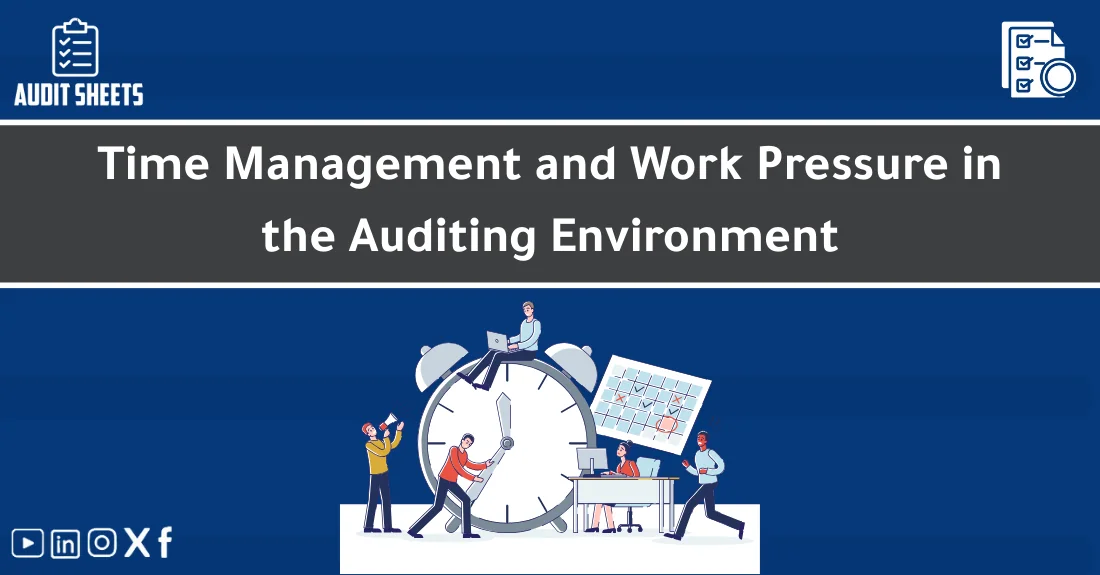
Time management for auditors is a persistent operational risk: firms and individual auditors must complete high-quality audit work under strict deadlines, complex sampling in auditing requirements, and the constraints of International Standards on Auditing (ISA) and local regulators such as SOCPA. This article provides practical, actionable strategies to reduce workload pressure, improve audit planning and closing efficiency, protect auditor independence, and ensure robust documenting of evidence and findings. It is part of a content cluster supporting The Ultimate Guide: The technical skills auditors need in the age of artificial intelligence.
Why time management matters for audit and accounting firms
Audit engagements are time-sensitive, regulated by ISAs (and national equivalents like SOCPA), and often involve multiple teams, complex sampling, and strict deliverables for clients and regulators. Poor time management increases the risk of late reporting, incomplete documenting of evidence and findings, compromised auditor independence due to excessive overtime and pressure, and lower staff morale and retention. For firms that bill by time or operate fixed-fee engagements, uncontrolled workload pressure also erodes profitability and client relationships.
Effective time management is not a soft skill — it’s an audit quality control mechanism. It helps ensure audit methodologies are applied consistently (e.g., risk assessments, substantive testing vs. controls testing), that sample sizes and sampling procedures are performed on schedule, and that audit planning and closing stages are completed with adequate review cycles to meet ISA documentation requirements.
Core concept: Time management for auditors — definition and components
Time management for auditors means structuring audit activities so that quality work is delivered within planned timelines while complying with ISAs and firm audit methodologies. Key components:
- Engagement planning: realistic scoping, resourcing, and scheduling at the engagement acceptance stage.
- Task prioritization: risk-based sequencing (high-risk areas first), aligning with ISA risk assessment procedures.
- Resource allocation: matching seniority to complexity — who performs sampling in auditing, who documents evidence and who reviews files.
- Monitoring and reforecasting: weekly progress tracking and adjustment of workhours or scope.
- Close and review management: scheduling time for senior reviews, clearance of significant findings, and ISA-compliant audit planning and closing documentation.
Examples
Example 1 — Medium-sized client inventory audit: plan 40 hours for substantive inventory testing; allocate 16 hours for sample selection and observation (sampling in auditing), 16 hours for valuation testing, and 8 hours for documentation and review. Schedule high-risk inventory counts and senior review within two business days of testing completion to allow follow-up.
Example 2 — Fixed-fee year-end audit: set formal buffer of 10-15% time for unexpected adjustments or audit evidence retrieval delays; document buffer as an acceptable contingency in the audit plan to avoid overruns that compromise quality.
Practical use cases and scenarios
Recurring situation: Year-end rush
The typical year-end environment compresses many tasks — final sampling, analytical review, completion of audit programs, and file sign-offs. Practical approach: conduct interim testing where possible, finalize risk assessments before year-end, and stagger fieldwork across teams. Use rolling checklists to prevent last-minute evidence gaps.
Scenario: Unexpected control weakness discovered late
If a significant control deficiency appears close to sign-off, immediate reallocation of hours is required: assign a senior to lead remediation testing, increase sampling for related balances (sampling in auditing), and document findings and management responses in accordance with ISA 265. Reforecast the timeline and communicate with the engagement partner and client within 48 hours.
Scenario: Multi-location audits
For audits across 3–10 sites, centralize planning and standardize audit programs. Pre-select sampling frames centrally to reduce time spent on local administrative tasks. Estimate travel-related downtime (typically 10–20% of on-site days) and build it into the fieldwork schedule.
Impact on decisions, performance, and outcomes
Better time management directly affects audit quality, firm profitability, and staff well-being:
- Quality: Adequate time for evidence gathering and review reduces the risk of unsupported conclusions and audit adjustments.
- Profitability: Accurate scoping and fewer overruns maintain fixed-fee margins; better utilization reduces the need for overtime pay or temporary hires.
- Regulatory compliance: Properly scheduled review cycles ensure ISA documentation and audit planning and closing requirements are satisfied, reducing inspection findings.
- Staff retention: Predictable workloads decrease burnout and turnover — a 10% reduction in unexpected overtime often improves retention metrics significantly in audit teams.
Decision-makers should treat time management as part of engagement risk assessment: insufficient time allocated to complex areas (e.g., fraud risk, related parties) should trigger scope changes, additional experienced resources, or modification of the audit opinion timeline.
Common mistakes and how to avoid them
- Underestimating sampling complexities: Mistake — choosing a small sample to save time. Fix — follow ISA sampling guidance, calculate statistical or judgmental sample sizes based on tolerable error and expected deviation; document rationale in workpapers.
- Poor sequencing of tasks: Mistake — completing low-risk work first and leaving high-risk areas until the end. Fix — prioritize tasks by risk, use Gantt charts to sequence high-risk procedures early.
- Ineffective delegation: Mistake — assigning seniors to routine work and juniors to complex testing. Fix — align task complexity with staff competency and reserve seniors for judgment-heavy work and final reviews.
- Insufficient buffers: Mistake — no contingency for client delays or incomplete documentation. Fix — include explicit contingency hours (10–20%) in the plan and track buffer consumption weekly.
- Documenting late: Mistake — leaving documenting evidence and findings until sign-off week. Fix — document immediately after procedures; enforce a “document within 48 hours” rule to preserve context and audit trail.
Practical, actionable tips and checklists
Pre-engagement checklist (Planning)
- Confirm scope and deliverables with client and partner; list non-audit tasks separately.
- Estimate hours by workstream: planning, testing (controls/substantive), sampling in auditing, documentation, review, and closing.
- Allocate responsible staff with back-up assignments; specify reviewer timelines.
- Include contingency hours (10–20%) and approval thresholds for using them.
Weekly workload control
- Run a weekly status meeting (15–30 minutes): highlight overruns, evidence gaps, and potential scope changes.
- Maintain a master task tracker with estimated vs. actual hours and % complete per workpaper.
- Reassign resources within 24–48 hours when critical tasks fall behind.
Fieldwork efficiency
- Perform high-risk substantive procedures early; use stratified sampling to focus on large balances.
- Adopt templated audit programs and standard documentation formats to save documentation time while meeting ISA requirements.
- Use time-boxed testing sessions (e.g., 3-hour focused blocks) to reduce context switching and improve concentration.
Closing and review
- Schedule senior reviews before planned sign-off; leave at least 2–3 days for clearance of review notes.
- Create a pre-closing checklist: unresolved adjustments, subsequent events, final analytical review, management representation, and auditor independence confirmation.
- Document engagement-level conclusions as you close each major area to avoid last-minute aggregation work.
KPIs / Success metrics to monitor
- Planned hours vs. actual hours by workstream (target variance: ±10%).
- Percentage of workpapers documented within 48 hours of completion (target: 95%).
- Review turnaround time: average time from reviewer comments to clearance (target: ≤3 days).
- Overtime hours per engagement (target reduction of 15% year-over-year).
- Engagement profitability: margin by engagement after time adjustments (benchmark to firm target).
- Number of inspection findings related to documentation and planning (target: zero critical findings).
FAQ
How should auditors estimate time for sampling in auditing?
Base time estimates on the sampling method (statistical vs. judgmental), population size, and expected deviation rate. Allow additional time for retrieval, stratification, and re-performance of failed items. Example: for a 500-item population with expected low deviation, budget 8–12 hours for sample selection, testing, and documentation; increase to 20+ hours if re-performance or follow-up is likely.
What is a practical buffer to include in audit planning?
Include 10–20% contingency hours for standard audits; for first-year engagements or high-change clients, consider 20–30%. Document the buffer and monitor consumption weekly. If buffer usage exceeds 50% mid-engagement, re-evaluate scope or request additional fee/time from the client.
How can firms protect auditor independence during high-pressure periods?
Rotate staff appropriately, avoid prolonged overtime for partners on the same client (risk of familiarity), and enforce cooling-off periods. Maintain a clear separation of duties so that those performing complex judgment do not also handle client-servicing roles that create self-review threats.
Which audit methodologies speed up audit planning and closing?
Risk-based methodologies with modular workpapers and pre-populated checklists reduce redundant work. Use software that integrates sampling, workpaper templates, and evidence linking so reviewers can find issues quickly. Standardized templates aligned to ISAs reduce interpretation time and rework.
Reference pillar article
This article is part of a broader content cluster supporting auditors in modern practice. See the pillar piece: The Ultimate Guide: The technical skills auditors need in the age of artificial intelligence for guidance on integrating technical tools and AI-assisted workflows that further enhance time management for auditors.
Next steps — action plan & call to action
Ready to reduce workload pressure and improve time management on your audits? Follow this short plan:
- Implement a pre-engagement planning template with explicit contingency hours.
- Standardize sampling procedures and templates for documenting evidence and findings.
- Introduce weekly monitoring with a single engagement tracker and an owner responsible for reforecasting.
If you want tools that help enforce these practices, try auditsheets to centralize audit programs, manage sampling, and track time against workpapers. Visit auditsheets to start a trial or request a demo tailored to ISA- and SOCPA-compliant engagements.